
Noisytoot
noisytoot
 0
0
 0
0
 0
0
Noisytoot
noisytoot
@nyxt It’s named after finger (RFC 1288, originally RFC 742), which according to the RFCs was named after a program called FINGER by Les Earnest.
(Also, apparently the finger protocol has had 4 RFCs, one of which (RFC 1196) was published only a month after the previous (RFC 1194) and “corrects and clarifies [it] in a minor way”. Did they not have errata at the time or what?)
0
0
1
Noisytoot
noisytoot
0
0
1
Noisytoot
noisytoot@kemona_halftau Lennart frequently has wrong opinions and enforces them on systemd. Examples include:
- https://github.com/systemd/systemd/issues/6237, where he insists that usernames beginning with numbers (or containing unicode) are invalid based on the fact that Fedora’s
adduserrejects them by default (while ignoring that they are allowed by POSIX and Debian’suseradddoesn’t even complain). This resulted in a security issue (usernames like0dayorpötteringwould result in a service running as root) which was eventually fixed but systemd still does not support these usernames (it now rejects them instead, which is better than silently running as root but still incorrect) - https://github.com/systemd/systemd/issues/9899, where he insists that Linux’s /dev/console should write to every console specified on the kernel command line (it does not, it only writes to the last one) and for this reason refuses to implement writing to every console in systemd. The workaround is to use Plymouth, which I tried to install yesterday but it resulted in an infinite loop in my initramfs and I decided I’d rather have systemd messages only written to the serial port than debug Plymouth causing a boot-loop
- https://github.com/systemd/systemd/issues/10130, where he insists that glibc defines the Linux API (it does not, the syscall interface is the Linux API) and refuses to add musl support (although this recently changed and systemd does now have musl support since version 259)
There’s also the fact that it provides APIs that various software (like GNOME) is increasingly dependent on and there aren’t always viable alternative implementations (elogind and eudev exist, but they’re extracted from systemd and at least elogind is incomplete).
And this isn’t exactly a systemd issue, but software unnecessarily linking to libsystemd (which then links to a whole load of other stuff including liblzma) is bad. It’s how the xz backdoor worked - OpenSSH linked to libsystemd for sd_notify (which is a really simple protocol that you can implement yourself without bringing in a dependency on all of libsystemd), and libsystemd linked to liblzma for unrelated features that OpenSSH didn’t use.
Then there’s also a whole load of unrelated software that’s called systemd-* for some reason. Like, systemd-boot has literally nothing to do with systemd (you could totally use it to boot a non-systemd system), and I’m not sure what exactly systemd-timesyncd, systemd-networkd, and systemd-resolved have to do with systemd either (I haven’t checked that they don’t depend on systemd for some reason but I’m not sure why they would).
0
0
1
Noisytoot
noisytoot
0
1
1
Noisytoot
noisytootFediverse defederation forces a degree of soft group consensus on moderation: it’s possible to say “if you’re talking to X, I don’t want to talk to you“.
How? If server A blocks server B, and neither server blocks server C, server C can still interact with both servers A and B. Server A could of course choose to also block server C for not blocking server B, but this would have to be done manually (you can’t necessarily tell if server C blocks server B, since blocklists are often not public and not all interactions are public either) and I don’t see how it’s forced.
1
0
0

 repeated

noodlejetski 
noodlejetski@masto.ai
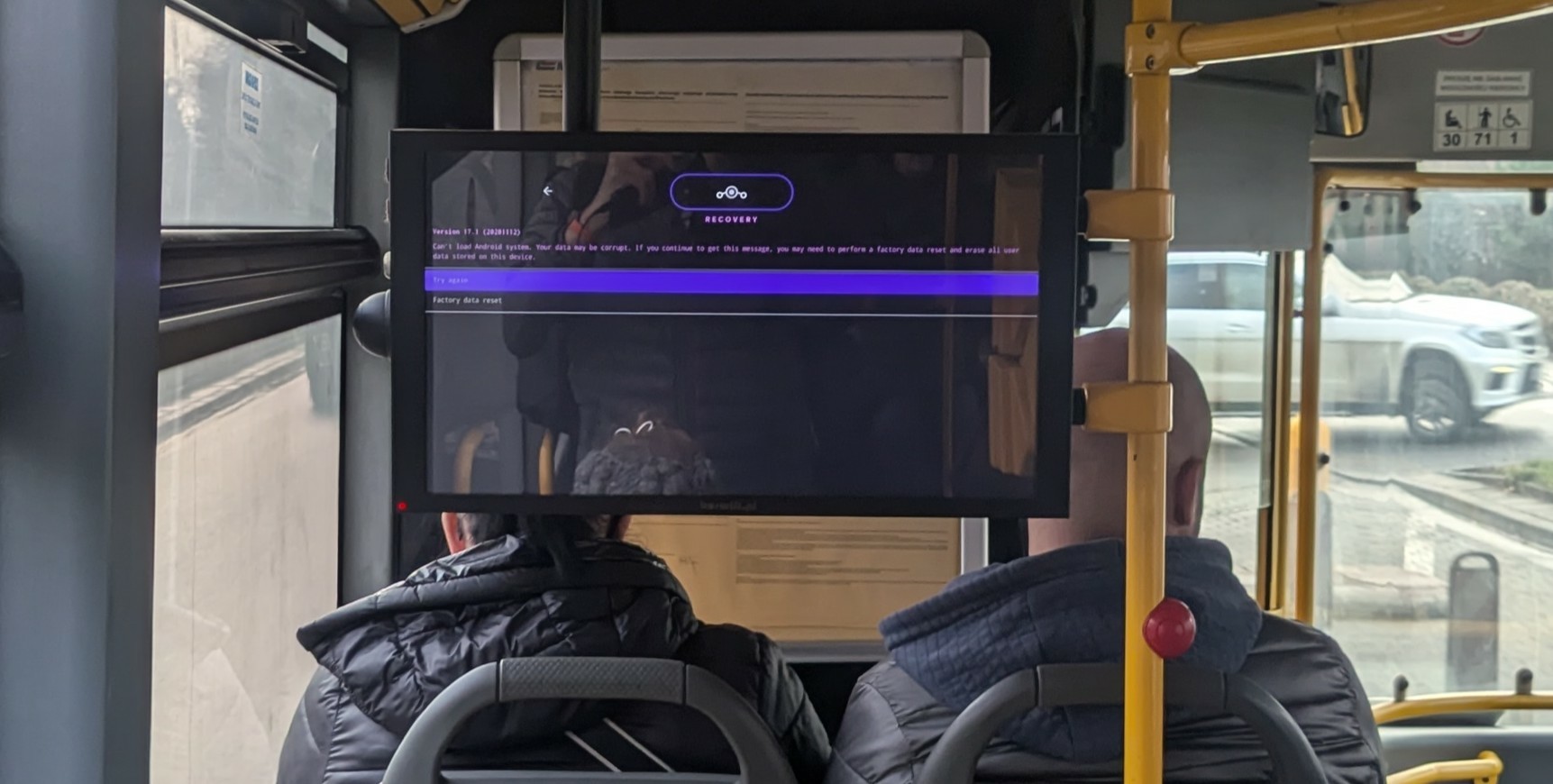
did... did someone install LineageOS on the bus TV?
 5
6
2
5
6
2