
Noisytoot
noisytoot
@unnick Yes. For example, the first line of the GPLv3 (after the copyright notice but before the preamble) is a license for the license:
Everyone is permitted to copy and distribute verbatim copies of this license document, but changing it is not allowed.
(Although the FAQ clarifies that you can in fact create modified versions of the GPL, provided you change the name, remove the preamble, and sufficiently alter the wording of the instructions-for-use at the end and make it not mention GNU.)
 0
0
 0
0
 0
0
Noisytoot
noisytootShow content
@maddy @foxyloon Hopefully it means they’ll drop all restrictions on unlocking the bootloader and make it work like on Google/OnePlus phones (fastboot oem unlock/fastboot flashing unlock).
Unlocking the bootloader on Motorola phones requires using an online service (bad, since they could choose to shut it down at any moment, as LG did) and agreeing to a likely illegal and completely unacceptable set of terms and conditions that includes the requirement not to sell your device and also kind-of a death threat.
1
0
2
Noisytoot
noisytootShow content
1
0
1
Noisytoot
noisytoot
@_hic_haec_hoc @neil @david_chisnall
(or call them “general purpose, always-on internet-connected devices with photo and video capabilities”)
That definition also covers any laptop with a webcam, if (like me) the user never turns their laptop off. It is quite difficult to provide an exact definition of what a smartphone is. You could add a “must have a cellular modem requirement”, but there are laptops with cellular modems.
How would you enforce this law anyway? And what about minors constructing their own smartphones (with a 3D printer, a small SBC, a touchscreen, a battery, and a cellular modem, it probably wouldn’t be all that hard to do).
1
0
0
Noisytoot
noisytoot@jiub @sleepyowl @chloetankahhui this reminds me of this dystopian story I read on gnu.org where possessing a debugger was illegal
0
0
1
Noisytoot
noisytoot@willglynn @maddy It would be possible with a serial RAM interface like OMI (which is used on POWER10).
I actually think a serial RAM interface could be a good thing, if it had free firmware. The problem is there’s only one implementation of OMI and it requires proprietary firmware.
0
0
0
Noisytoot
noisytoot@seabass @maddy at least it’s not RISC-V with its rv64imafdcbv_zic64b_zicbom_zicbop_zicboz_ziccamoa_ziccif_zicclsm_ziccrse_zicntr_zicond_zicsr_zifencei_zihintntl_zihintpause_zihpm_zimop_zmmul_za64rs_zaamo_zalrsc_zawrs_zfa_zfhmin_zca_zcb_zcd_zcmop_zba_zbb_zbs_zkt_zvbb_zve32f_zve32x_zve64d_zve64f_zve64x_zvfhmin_zvkb_zvkt_zvl128b_zvl32b_zvl64b_supm
1
0
0
Noisytoot
noisytoot
1
0
1
repeated

abadidea
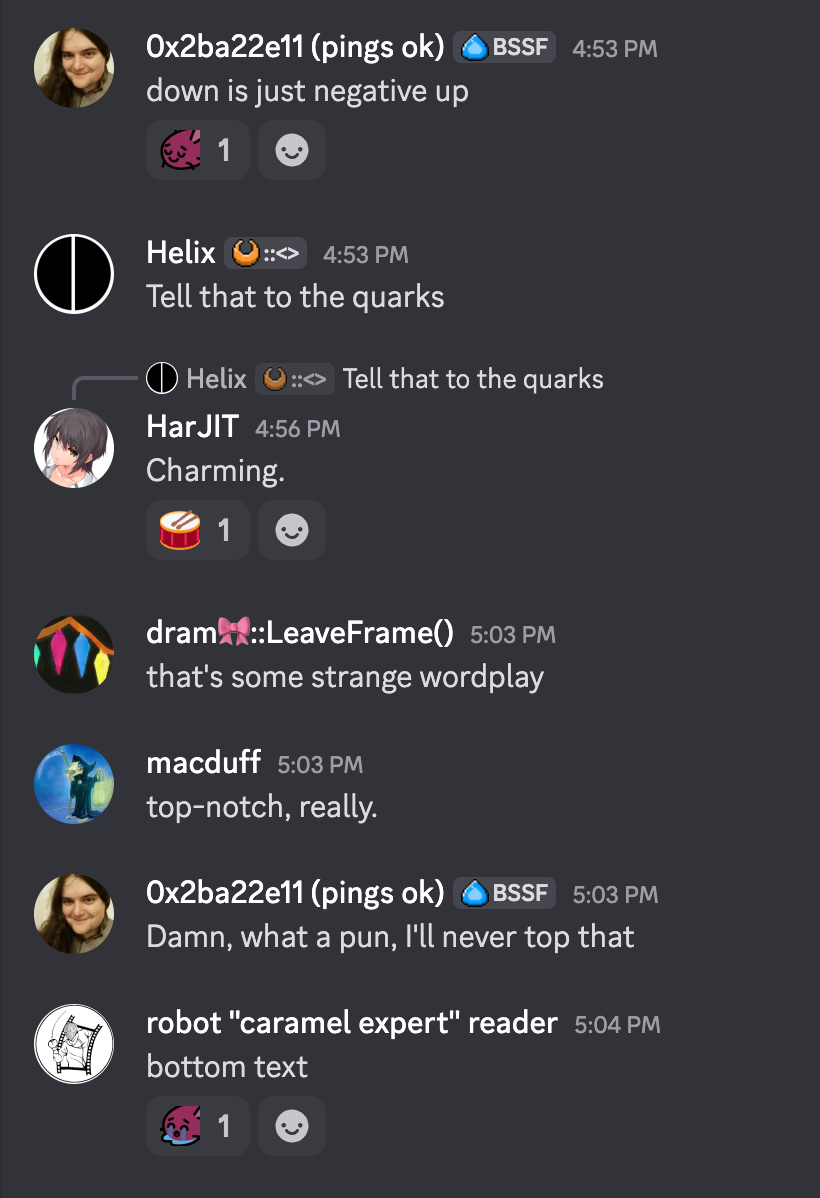
0xabad1dea@infosec.exchangewatching this unfold between my friends left me with a feeling that I can only describe as "pride"... or perhaps "the desire to inflict it on others"
 15
6
1
15
6
1
Noisytoot
noisytoot
1
0
0
Noisytoot
noisytoot
2
0
0
Noisytoot
noisytootIf you can get that code merged, yes, that seems to be the case.
Unless there’s a CLA or copyright assignment, contributors retain copyright and the project maintainers have no special status or rights other than those granted to everyone by the license. It doesn’t really make sense that a project maintainer’s decision to merge a contributor’s LLM-generated code can relicense code written by other people.
Otherwise what would prevent me from, say, forking Linux, merging partially LLM-generated code into my fork, then declaring that all of Linux (or my fork of it, which is almost identical) is now public domain?
1
0
0
Noisytoot
noisytoot@civodul @admin It varies by jurisdiction. In the US, LLM output cannot be copyrighted and is public domain, but in the UK it can be copyrighted and the copyright holder is whoever prompted the LLM (assuming the LLM is not plagiarizing anything, which is questionable).
If it’s “legally significant” (10 lines of code or more), and if these LLM-produced contributions are not clearly identified, then one could consider the whole as public domain, AIUI.
Does that mean that you can make any program (or even any copyrighted work) public domain by adding LLM output to it and not clearly marking it? That can’t be right…
2
0
1