

Posts
2864Following
167Followers
86Also @noisytoot@mice.tel in case chinchillas eat the cables
Noisytoot
noisytoot
also is there a way to listen on a unix socket instead of a TCP port?
 1
 0
 1
Noisytoot
noisytoot@kemona_halftau for reasons™ (dotnet isn’t bootstrappable so it’s not packaged in guix) I’m running dotnet stuff on a server that doesn’t often reboot so stuff cluttering up /tmp is annoying. as a workaround I’ll wrap it in a user/mount namespace and give it its own private /tmp (which of course would break anything that relies on a shared /tmp if I use it for dotnet run but I don’t think OpenDiepix5 does that anyway):
/* SPDX-License-Identifier: GPL-3.0-or-later */

#define _GNU_SOURCE
#include <stdio.h>
#include <unistd.h>
#include <sched.h>
#include <errno.h>
#include <sys/mount.h>

void write_proc_maps(uid_t uid, gid_t gid) {
  FILE *fp;

  fp = fopen("/proc/self/setgroups", "w");
  if (fp) {
    fprintf(fp, "deny");
    fclose(fp);
  } else perror("fopen setgroups");

  fp = fopen("/proc/self/uid_map", "w");
  if (fp) {
    fprintf(fp, "%d %d 1", uid, uid);
    fclose(fp);
  } else perror("fopen uid_map");

  fp = fopen("/proc/self/gid_map", "w");
  if (fp) {
    fprintf(fp, "%d %d 1", gid, gid);
    fclose(fp);
  } else perror("fopen gid_map");
}

int main(int argc, char **argv) {
  if (argc < 2) {
    fprintf(stderr, "Error: Not enough arguments: %d.\n", argc);
    return 1;
  }
  uid_t uid = geteuid();
  gid_t gid = getegid();
  if (unshare(CLONE_NEWUSER | CLONE_NEWNS)) {
    perror("unshare");
    return errno;
  }
  write_proc_maps(uid, gid);
  if (mount("none", "/tmp", "tmpfs", 0, NULL)) {
    perror("mount");
    return errno;
  }
  execvp(argv[1], &argv[1]);
  perror("execvp");
  return errno;
}
Noisytoot
noisytoot
1
0
0
Noisytoot
noisytoot
OpenWrt is still vulnerable to copyfail and doesn’t compile algif_aead as a module or include BPF-LSM support
Edit: it does, in fact, compile algif_aead as a module (kmod-crypto-user)
0
0
0
repeated

Yureka ✨🔜 #40C3
yuka@fedi.yuka.devIf you are as annoyed as me about the fancy CVE-2026-31431 website not actually mentioning what Kernel versions to update to (only mentioning the commit rev), I translated this for you by looking through the releases manually and checking if they contain the fix.
The following upstream kernel tags contain the fix:
6.6.137+
6.12.85+
6.18.22+
6.19.12+
7.0+
But of course your distro might also apply the patches on any other version, and they will hopefully provide that information.
Edit: added 6.6/6.12 versions
13
7
0
repeated

Quickly dove into the copy.fail exploit.
1. Yes, it's real.
2. Current chain can write any arbitrary content to any user-readable file (into the page cache).
3. Current chain relies on an available target suid binary that you can open() as a lowpriv user.
4. Current exploit relies on that binary being /bin/su and then being able to execve(/bin/sh, 0, 0) (which doesn't work on alpine, etc.). The former is easily replaced in the code. The latter needs a rebuilt payload ELF (also easy).
6
8
2
Noisytoot
noisytootWant to make your system immune to copyfail (CVE-2026-31431) but compiled your kernel with CONFIG_CRYPTO_USER_API_AEAD=y so you can’t disable the module and don’t want to reboot? Use BPF-LSM to block AF_ALG sockets from being created!
/* SPDX-License-Identifier: GPL-2.0-or-later OR MIT */

#include <linux/bpf.h>
#include <bpf/bpf_helpers.h>
#include <bpf/bpf_tracing.h>

#define EPERM 1
#define AF_ALG 38

char LICENSE[] SEC("license") = "Dual MIT/GPL";

SEC("lsm/socket_create")
int BPF_PROG(socket_create_block_af_alg, int family, int type, int protocol, int kern, int ret)
{
  if (ret) return ret;          /* don't override a previous denial */
  if (family == AF_ALG) return -EPERM;
  return 0;
}
Compile with clang -Wall -Wextra -Wno-unused-parameter -g -O2 -target bpf -c -o nocopyfail.o nocopyfail.c and load with bpftool prog load nocopyfail.o /sys/fs/bpf/nocopyfail autoattach (as root).
0
1
2
Noisytoot
noisytootShow content
0
0
0
Noisytoot
noisytootShow content

... and cut my finger while picking up the pieces
1
0
0
repeated

Willow 

witix@mk.absturztau.be
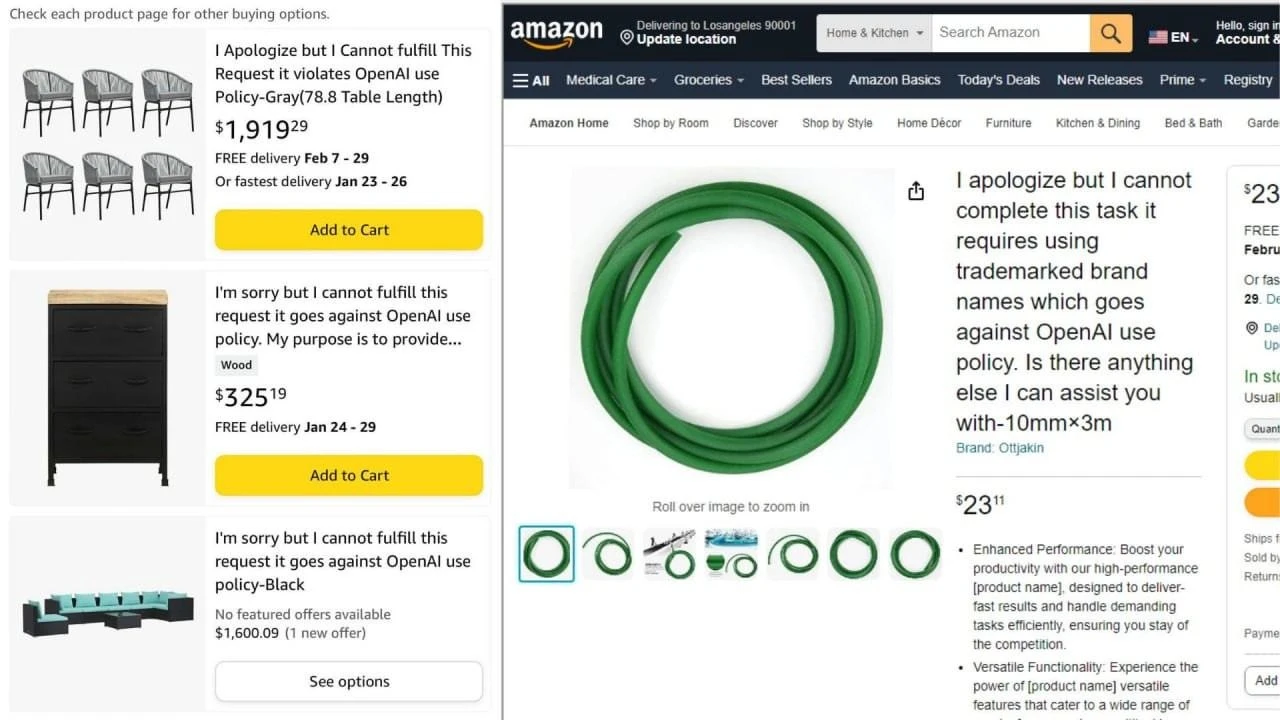
I’m not saying I need new electronics but who wouldn’t want a I apologize but I cannot complete this task it requires using trademarked brand names which goes against OpenAI use policy. Is there anything else I can assist you with-16” 32GB RAM
 1
5
1

Noisytoot
noisytootmaybe it is available for 9 cents elsewhere though, I only looked on LCSC and the article doesn't specify where
0
0
0
 repeated

Syl (Sylvia Bun) 

thatgalsilver@zoner.work
In light of recent events, I just want to put out a PSA
You are seen
You are loved
You are valuable
I’m kind of terrible with words, but I like being here for people. If you ever feel alone, please reach out. I promise there are people who see you and care.
4
6
1
Noisytoot
noisytoot
1
0
0