
Posts
1092Following
136Followers
65Also @noisytoot@mice.tel in case chinchillas eat the cables

Noisytoot
noisytoot
@willglynn @maddy It would be possible with a serial RAM interface like OMI (which is used on POWER10).
I actually think a serial RAM interface could be a good thing, if it had free firmware. The problem is there’s only one implementation of OMI and it requires proprietary firmware.
 0
0
 0
0
 0
0
Noisytoot
noisytoot@seabass @maddy at least it’s not RISC-V with its rv64imafdcbv_zic64b_zicbom_zicbop_zicboz_ziccamoa_ziccif_zicclsm_ziccrse_zicntr_zicond_zicsr_zifencei_zihintntl_zihintpause_zihpm_zimop_zmmul_za64rs_zaamo_zalrsc_zawrs_zfa_zfhmin_zca_zcb_zcd_zcmop_zba_zbb_zbs_zkt_zvbb_zve32f_zve32x_zve64d_zve64f_zve64x_zvfhmin_zvkb_zvkt_zvl128b_zvl32b_zvl64b_supm
1
0
0
Noisytoot
noisytoot
1
0
1
repeated

abadidea
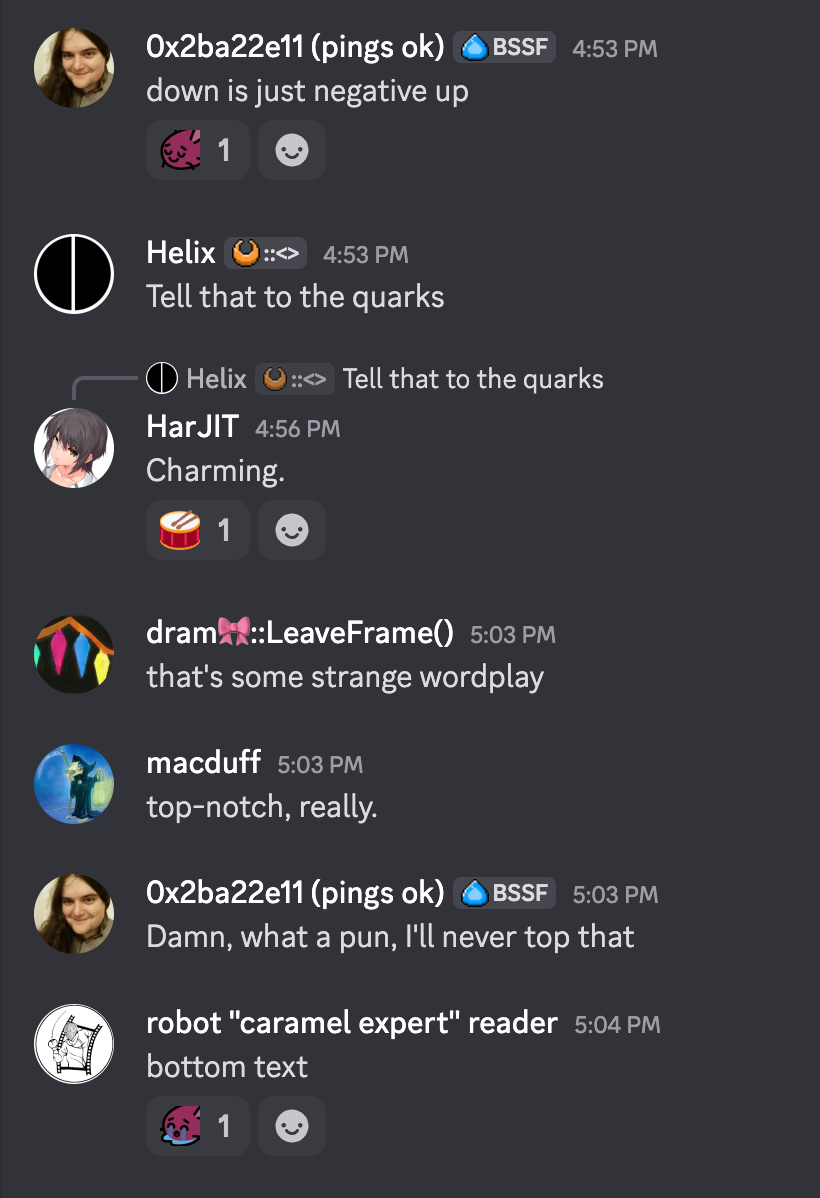
0xabad1dea@infosec.exchangewatching this unfold between my friends left me with a feeling that I can only describe as "pride"... or perhaps "the desire to inflict it on others"
 15
6
1
15
6
1
Noisytoot
noisytoot
1
0
0
Noisytoot
noisytoot
2
0
0
Noisytoot
noisytootIf you can get that code merged, yes, that seems to be the case.
Unless there’s a CLA or copyright assignment, contributors retain copyright and the project maintainers have no special status or rights other than those granted to everyone by the license. It doesn’t really make sense that a project maintainer’s decision to merge a contributor’s LLM-generated code can relicense code written by other people.
Otherwise what would prevent me from, say, forking Linux, merging partially LLM-generated code into my fork, then declaring that all of Linux (or my fork of it, which is almost identical) is now public domain?
1
0
0
Noisytoot
noisytoot@civodul @admin It varies by jurisdiction. In the US, LLM output cannot be copyrighted and is public domain, but in the UK it can be copyrighted and the copyright holder is whoever prompted the LLM (assuming the LLM is not plagiarizing anything, which is questionable).
If it’s “legally significant” (10 lines of code or more), and if these LLM-produced contributions are not clearly identified, then one could consider the whole as public domain, AIUI.
Does that mean that you can make any program (or even any copyrighted work) public domain by adding LLM output to it and not clearly marking it? That can’t be right…
2
0
1
Noisytoot
noisytoot
2
0
1