
✧✦Catherine✦✧
whitequark@treehouse.systems
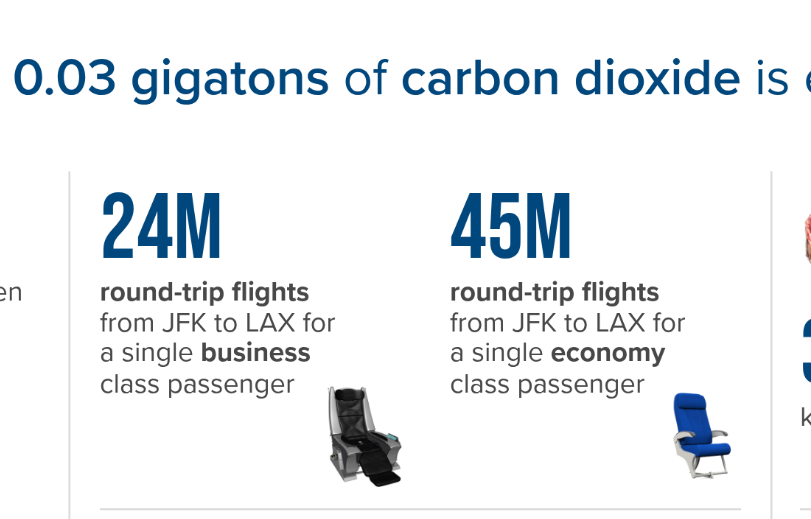
hold on, what kind of emissions attribution is happening to make business class travel less CO2-efficient than economy class travel?? your ass weighs the same no matter which chair you sit in
 11
11
 0
0
 0
0

Lizzie Crowdagger 
crowdagger@corneill.es

@whitequark they are larger to you can have less people per flight?
1
0
0
✧✦Catherine✦✧
whitequark@treehouse.systems@crowdagger nobody makes flights with business class seats only
2
0
0

val
val@oc.todon.fr@whitequark @crowdagger they would if everyone wanted to fly business class regardless of cost
0
0
0
✧✦Catherine✦✧
whitequark@treehouse.systemsto everyone who responds with "it's proportional to square footage": nobody flies planes configured for business class only. "if the moon was made of cheese we couldn't mine 3He from it" but in reality it isn't so why should I accept this assumption?
5
0
0

Graham Sutherland / Polynomial
gsuberland@chaos.social@whitequark my guess would be that they're basing it on the total emissions of the plane for the journey divided by the relative space taken up by the passengers.
2
0
0
✧✦Catherine✦✧
whitequark@treehouse.systems@gsuberland right so the next question is "why is this an intellectually honest way to calculate per-passenger emissions"
3
0
0
Graham Sutherland / Polynomial
gsuberland@chaos.social@whitequark so the value judgement they're making there would be that if business class wasn't there then you could move more people per flight, thus making it more carbon efficient. I don't know if that's the *best* way to think about it, but it is one way.
1
0
0
✧✦Catherine✦✧
whitequark@treehouse.systems@gsuberland right, but as far as i know airlines barely (if at all) break even on economy class seats, so it's just as easy to argue that if business class seats weren't there we'd just see fewer flights. (which would probably be even more carbon efficient?)
0
0
0

d.rift
d_rift@beige.party@whitequark @gsuberland if the plane would have flown empty, it's not.
1
0
0
✧✦Catherine✦✧
whitequark@treehouse.systems@d_rift @gsuberland what would more likely happen is that the route would become a lot less profitable and the amount of flights on it would be reduced (somewhat or to zero), since airlines barely break even on economy seats
0
0
0

Karl Heinz Häsliprinz
KarlHeinzHasliP@climatejustice.social@whitequark It's about the volume, not the weight.
1
0
0
✧✦Catherine✦✧
whitequark@treehouse.systems@KarlHeinzHasliP fuel use increases in proportion to weight
1
0
0

estelle
estelle@mstdn.social@whitequark it *should* be about the weight rather than the volume because thrust overcomes drag, and induced drag originates from the lift vector being in slightly the wrong direction, which must counteract the total wet and dry mass of the plane
this was also the rationale given for trying to overcharge overweight passengers. it was a more woke time though, so as far as i remember those kinds of surcharges fell out of favor (?)
1
0
0
✧✦Catherine✦✧
whitequark@treehouse.systems@estelle yeah i don't think anybody tried it since, and even at the time it was probably a publicity stunt? wasn't it done by ryanair
1
0
0

tyzbit
tyzbit@toot.now@whitequark i'm a little surprised at so many weight/dimension answers. it's the service. business and first class get more meals, drinks, service in general. if they eat steak, a cow needed to be raised. heated fuckin towels. come on.
1
0
0
✧✦Catherine✦✧
whitequark@treehouse.systems@tyzbit meals sure but i'm pretty sure heating water and towels and such is done with waste heat from the engines and is essentially free
0
0
0

Ada Worcester 🏳️⚧️
pikhq@treehouse.systems@whitequark as we all know planes burn fuel based on floor space, and not on some other unit
0
0
0
Karl Heinz Häsliprinz
KarlHeinzHasliP@climatejustice.social@whitequark but weight of the plane itself is constant for a fixed volume and passengers are low weight per volume (compared to cargo). So in total, business class does need quite a lot more fuel per passenger (fewer passengers to distribute the fixed consumption for the weight of the plane itself over)
1
0
0
✧✦Catherine✦✧
whitequark@treehouse.systems@KarlHeinzHasliP weight of the plane isn't significantly more than the weight of the passengers: a B737-600 is 36 t empty and (at 100kg per 130 seats) would accept 13 t of passengers. this is just more unsound assumptions
0
0
0
Graham Sutherland / Polynomial
gsuberland@chaos.social@whitequark it does rather gloss over externalities doesn't it
1
0
0
Graham Sutherland / Polynomial
gsuberland@chaos.social@whitequark arguably a far better metric for the denominator in that calculation would be the number of bags you took. mean passenger mass probably doesn't vary that much for any given route, whereas bag count is probably a fairly accurate proxy for 15-20 kg of carried mass each.
2
0
0
Graham Sutherland / Polynomial
gsuberland@chaos.social@whitequark although even then the calculation has major uncertainty factors for reasons you don't even control as a passenger, like "did the flight sell out?" (since you're then dividing the constant mass of the aircraft by fewer passenger)
2
0
0
✧✦Catherine✦✧
whitequark@treehouse.systems@gsuberland it's not even constant! the amount of fuel would vary with the amount of passengers (as well as the route and decisions like "do we need to take on fuel for the flight back / next flight")
1
0
0

Markus Unterwaditzer
untitaker@gts.woodland.cafe@whitequark if you're arguing that space used is totally irrelevant to this calculation, and only weight matters (not sure i'm convinced by that, since all of that is input into how large and heavy the plane needs to be), i think it's plausible that:
1. business class seats themselves weigh more
2. the meals that come with business class are more expensive/energy intensive to produce
3. extrapolation of weight from "the avg-type business class flyer" + their luggage vs the same for economy
1
0
0
✧✦Catherine✦✧
whitequark@treehouse.systems@untitaker what i'm saying is that this relies on assumptions that someone just pulled out of their ass and almost everyone in the replies is uncritically coming up with ways to justify it
1
0
0

@gsuberland @whitequark the aircraft and fuel weigh much more than the passengers and their luggages (like 10x by my napkin) so I think it's not an unreasonable simplification to just divide the trip emissions into the passengers by the space they take.
1
0
0
✧✦Catherine✦✧
whitequark@treehouse.systems@chrisvest @gsuberland for a B737-600, the empty jet weighs 36t and the passengers would weigh ~13t if i go with the "dense but still realistic" seating. so it's not an order of magnitude
edit: fixed typo (767->737)
2
0
0
Markus Unterwaditzer
untitaker@gts.woodland.cafe@whitequark idk where you got the screenshot from but i guess the objective is to make an infographic to inform individual choices, not to make a predictive model of how much CO2 the plane is actually going to emit. same with these cost-per-token models (today) or cost-per-google-search-query (10 yrs ago)
1
0
0
✧✦Catherine✦✧
whitequark@treehouse.systems@untitaker it's from https://climatejustice.social/@ketan/117116460512312185
0
0
0

>>>>>>>
artemis@with.iridium.ink@whitequark i think the idea is that if the business seats were economy they'd be more efficient. but again like you say. nobody does that. and nobody *will* do that because they'd lose a bunch of money. so like rn a seat's a seat.
2
0
0
>>>>>>>
artemis@with.iridium.ink@whitequark better to compare against private jets or something
1
0
0
estelle
estelle@mstdn.social@whitequark i had to look it up, it appears to have been started by samoa airlines in around 2013 (has it been that long?), and cnn circa 2023 says united airlines and others require buying two seats, but may refund it if empty seats are available
fox news (ugh) outright states in their article that "1% reduction in weight would save 0.75% the fuel consumption"
canada appears to have a "one person, one fare" law for airliners
(i have not flown in an airliner for a very long time)
1
0
0
Graham Sutherland / Polynomial
gsuberland@chaos.social@whitequark @chrisvest and even just from passive consumption of ACARS Drama it seems clear that aircraft are fuelled to significantly different levels depending on the passenger load.
1
0
0
✧✦Catherine✦✧
whitequark@treehouse.systems@gsuberland @chrisvest meatbags: fuckin heavy, actually
2
0
0
✧✦Catherine✦✧
whitequark@treehouse.systems@gsuberland @chrisvest i was curious and did some calculations, apparently if you go with some reasonable assumptions (158 cm max linear dimension for checked bags, 30 kg max weight) then the checked bag density must be no more than 1/5 of passenger density
0
0
0

@whitequark @gsuberland a question i am asking from a place of total ignorance and curiosity: do commercial airlines vary the amount of fuel they take based on the total weight of the boarded flight and expected distance?
they keep finding ways to pack flights fuller and fuller (at least in the merica), which goes against how i would expect cost optimization to work unless they were being really wasteful with fuel to begin with
1
0
0
✧✦Catherine✦✧
whitequark@treehouse.systemsa question i am asking from a place of total ignorance and curiosity: do commercial airlines vary the amount of fuel they take based on the total weight of the boarded flight and expected distance?
yes, this is a really important factor in the pre-flight calculations and getting it even a few % off can have serious consequences
2
0
0
✧✦Catherine✦✧
whitequark@treehouse.systemsthey keep finding ways to pack flights fuller and fuller (at least in the merica), which goes against how i would expect cost optimization to work unless they were being really wasteful with fuel to begin with
don't forget that airlines often lease most of their planes rather than outright owning them (and even if they own it they took out a loan first), so any idle seats or idle planes cost them a lot of money regardless of fuel
0
0
0
Graham Sutherland / Polynomial
gsuberland@chaos.social@whitequark @chrisvest related: a lot of lift weight capacities are actually pretty terrifying when you do the numbers. very easy to overload a lot of them with just a few tall heavily built people. and the safety margins on a lot of them are... uh... degraded.
1
0
0
✧✦Catherine✦✧
whitequark@treehouse.systems@gsuberland @chrisvest huh. well, that's one more thing i'll proceed to not think about
0
0
0
@whitequark @gsuberland I looked at the 787 on wikipedia and its in a 200t-250t weight class, with the 787-10 carrying up to 310 passengers. I picked 85kg per passenger+luggage ( maybe that’s low) which gave me 26.3t
1
0
0
@whitequark @gsuberland I think your numbers are off, though I can’t find the 767-600 specifically. A 767-300 has max take-off weight of 158t and max payload of 40t. I can’t imagine the fuel makes up the difference.
1
0
0
✧✦Catherine✦✧
whitequark@treehouse.systems@chrisvest @gsuberland oh, sorry, i made a typo. it's 737, not 767
1
0
0

Andrew Zonenberg
azonenberg@ioc.exchange@whitequark @aeva @gsuberland what i'm more curious about is if they use counts of pax/bags or if they use some kind of sensors in the landing gear to get actual weight.
When you're flying little single engine stuff it's common to actually weigh everyone and bags to make sure you're not too unbalanced
1
0
0
Graham Sutherland / Polynomial
gsuberland@chaos.social@azonenberg @whitequark @aeva airlines and safety bodies rely on "Standard Passenger Weight" studies for the passenger part. baggage is weighed.
the figures include uncertainties.
2
0
0
Andrew Zonenberg
azonenberg@ioc.exchange@gsuberland @whitequark @aeva checked, i assume you mean? i've never had anyone weigh my carryon
1
0
0
Graham Sutherland / Polynomial
gsuberland@chaos.social@azonenberg @whitequark @aeva yeah checked. since carry on is restricted you can assume a fixed upper bound per passenger.
1
0
0
✧✦Catherine✦✧
whitequark@treehouse.systems@gsuberland @azonenberg @aeva oh right they probably do it when you check it in
0
0
0
Graham Sutherland / Polynomial
gsuberland@chaos.social@azonenberg @whitequark @aeva obviously it's not globally static - average passenger mass in Texas is gonna be very different to Singapore.
0
0
0
@whitequark @gsuberland ooh, yes, tracks. Seems like, the smaller the plane, the bigger a percentage of the take-off weight the passengers can take.
1
0
0
✧✦Catherine✦✧
whitequark@treehouse.systems@chrisvest @gsuberland that is an even stronger argument against making a single pair of figures for economy/business: it strongly depends on the composition of the fleet!
0
0
0

Annette
nettles@mastodon.scot@whitequark My instinct would be: we need to apportion the carbon costs *somehow* between the people paying for the service. Sure you could split it by mass, by area, by head, but I feel like there's some argument to split by amortized price paid after discounts (acknowledging that business class seats aren't all actually paid for at full price). There's a sense in which if you're paying more of the money that makes the thing able to happen, you are more responsible.
2
0
0
✧✦Catherine✦✧
whitequark@treehouse.systems@nettles business class seats are typically not 2x more expensive than economy, from what i've seen
1
0
0

Keenan Tims
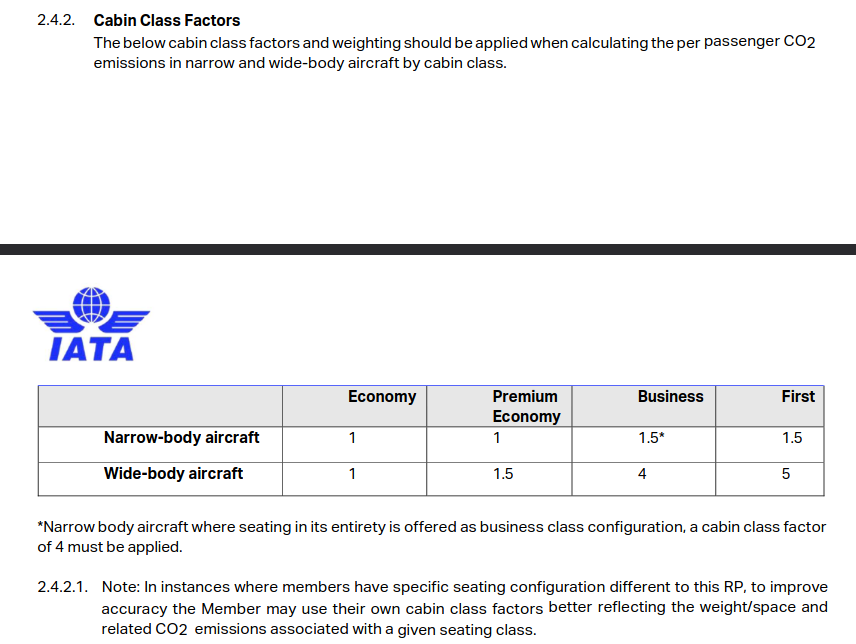
ktims@nonexistent.ca@whitequark If you follow the breadcrumbs, it leads to IATA RP 1726 by way of https://github.com/google/travel-impact-model , which prescribes a cabin class factor with very little justification. Despite the lack of concrete justification, this is an industry publication, and I don't think it's unreasonable to use their own best practices in lieu of a better model.
I don't see how you can argue that business/first is equally efficient to economy, so on what basis would you prefer to reconcile that? Are you trying to argue that because business seats exist on the plane, you shouldn't be responsible for their contribution to reduced per-pax efficiency if you use one...?
 2
2
0
2
2
0
✧✦Catherine✦✧
whitequark@treehouse.systems@ktims no, I argue that you shouldn't pull causal attribution out of your ass if you want your statistics to appear trustworthy and not undermine your cause
1
0
0
✧✦Catherine✦✧
whitequark@treehouse.systems@ktims thank you for tracking this down, I didn't realize IATA publishes this document. I agree that this is not on the author of the inforgraphic in this case
0
0
0
Annette
nettles@mastodon.scot@whitequark Which makes me wonder, how do we apportion carbon costs associated with livestock? By mass or by value? Is equal mass of fillet steak apportioned the same share as low value minced meat? As hide, as offal?
1
1
0

half/byte
halfbyte@ruby.social@whitequark square footage is not the correct metric, obviously. But first class seats are heavy. A brief web search not only gives me figures of 135kg to over 200kg for the luxury variant which already nearly doubles to triples the weight pp, in some cases airlines even need to add counter weights to the back of the plane. Add things like showers and the additional water for those.
These are extremes, of course, but this can add all up.
3
0
0
✧✦Catherine✦✧
whitequark@treehouse.systemsi stand corrected, your ass does weigh more in a first class seat (if you add the weight of the seat in) https://ruby.social/@halfbyte/117118864402458450
2
0
0

✧✦Catherine✦✧
whitequark@treehouse.systemsinterestingly, the infographic above doesn't look like a very close match to IATA class factors (below; which i didn't know about) but is a pretty close match to "going from economy to business class seat effectively doubles passenger weight"
1
0
0

Thomas Fuchs
thomasfuchs@hachyderm.io@whitequark compared to how much the plane and fuel weighs, the total uhm, biomass in the plane is really not that much
1
0
0
✧✦Catherine✦✧
whitequark@treehouse.systems- for a B737-600, it's 36 t of plane and 13 t of pax (and then fuel)
- fuel load significantly varies with passenger count
1
0
0
half/byte
halfbyte@ruby.social@whitequark that being said, I find your argument about how airlines don't fly economy only a bit disingenuous. "These flights would not exist without the business class seats" is probably correct, but that should not affect an attempt to properly attribute emissions to different seatings, should it?
2
0
0
✧✦Catherine✦✧
whitequark@treehouse.systems@halfbyte I think it is intellectually dishonest to make attributions like that when no clear causal link exists
1
0
0
✧✦Catherine✦✧
whitequark@treehouse.systems@halfbyte now I'm not saying there's no link. the fact that business seats subsidize the existence of some flights is a link, and a pretty important one! but that doesn't justify distilling it into an infographic with opaque assumptions that imply a clear and immediate causal link where there isn't one
2
0
0
half/byte
halfbyte@ruby.social@noisytoot @whitequark my main theory is that they make for good influencer content.
I don't think they are particularly common, I believe the Emirates A380 is one of them.
1
0
1
Annette
nettles@mastodon.scot@whitequark I did a search for return flights between JFK and LAX for the 23rd to the 30th, and the economy class was ~£550 and the business class ~£2100. I think the US market is quite different from over here.
1
0
0
✧✦Catherine✦✧
whitequark@treehouse.systems@nettles sorry i meant "they are usually much more than 2x more expensive"
1
0
0

k, cis iirc
kouhai@treehouse.systems@halfbyte @noisytoot @whitequark or like, petrostate /billionaire trust fund kid money.
0
0
1
Thomas Fuchs
thomasfuchs@hachyderm.io@whitequark the max weight is 65.5t so only ~20% flesh 😅
1
0
0
✧✦Catherine✦✧
whitequark@treehouse.systems@thomasfuchs 737-600 is a regional jet, you wouldn't normally load it to the brim with fuel
1
0
0
half/byte
halfbyte@ruby.social@whitequark to be honest, in the grand scheme of things, it probably doesn't even matter. People who fly business or business plus or whatever are (with the obvious exceptions, see my other post, haha) probably frequent flyers, so their CO2 emissions are off the charts anyway, so a one digit factor is probably ending up as a rounding error.
1
0
0
✧✦Catherine✦✧
whitequark@treehouse.systems@halfbyte ... which would have been a much better statistic to highlight in terms of impact
1
0
0
Annette
nettles@mastodon.scot@whitequark Ah, I see. Though my understanding is that the sticker price is not paid by all of them: many of them are regular flyers and there are a variety of incentive programs that result in various discounts. I am wondering if the actual amount paid may be closer to the factor of two... Though honestly I have no idea if that's what they're doing, I'm mostly trying to imagine how I'd go about this.
1
0
0
✧✦Catherine✦✧
whitequark@treehouse.systems@nettles good question! i've only flown business class once and not even by choice, so i know approximately nothing about it
0
0
0
half/byte
halfbyte@ruby.social@whitequark that said, one last tidbit from the article that mentioned the counter weights (a refitting of a Swiss A330 btw.), they ended up with an emission factor of ~5 due to the 1,5t counter weight. Guess which seats actually got lighter in the refitting. Also the counter weight obviously means higher overall emissions for the flight.
That's just completely bananas.
1
0
0
Thomas Fuchs
thomasfuchs@hachyderm.io@whitequark apparently that specific plane isn't popular with airlines because of passenger count and routes for that sort of range, and flying shorter trips isn't as efficient as with some other planes.
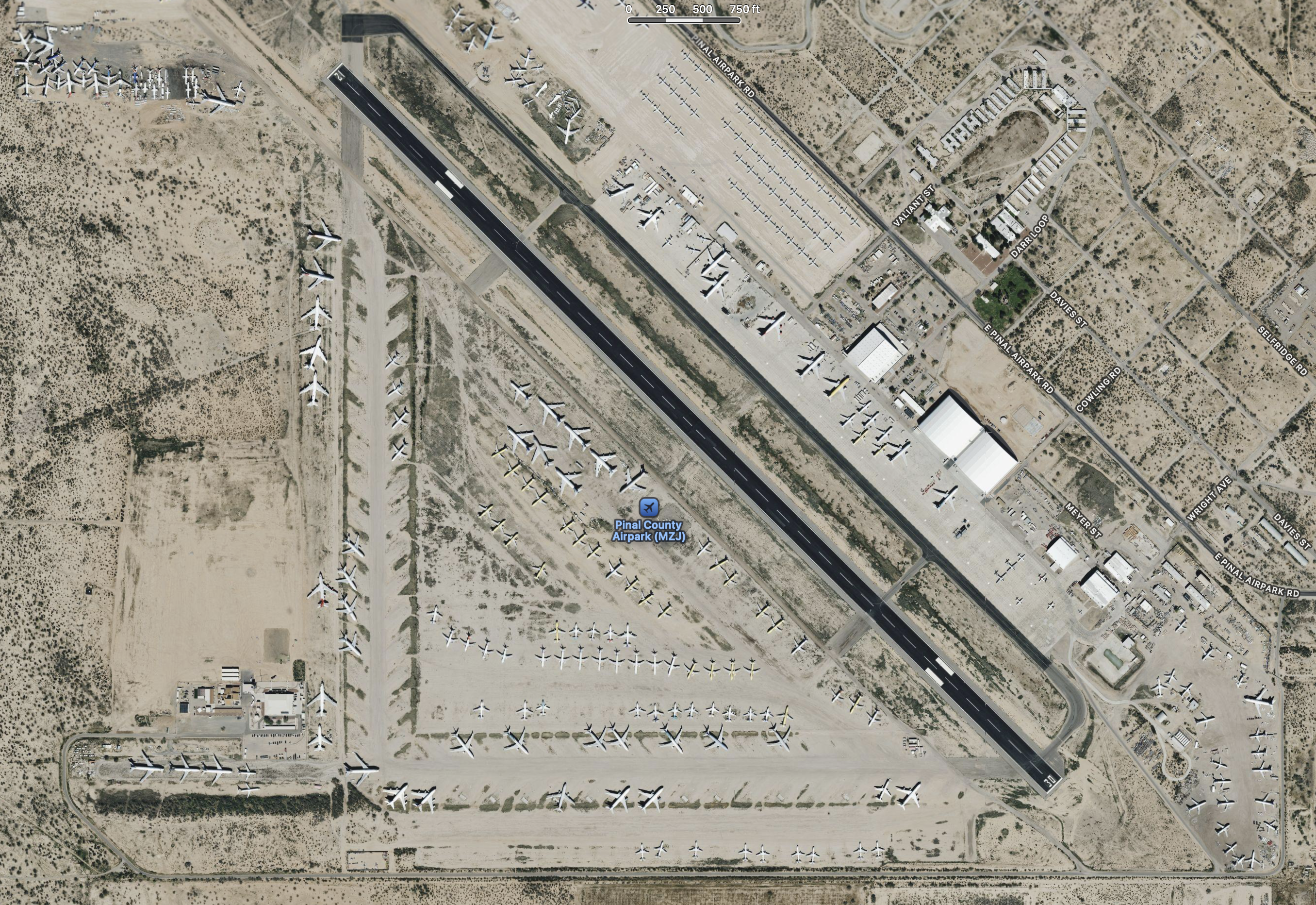
we live super close to an airliner graveyard (they park unused planes there), can see it from my house... should try to go there some time and make some photos
 1
0
0
1
0
0

💙🩷💜 Brett [he/him/any]
brettm@swarm.coiloptic.org
0
0
0
💙🩷💜 Brett [he/him/any]
brettm@swarm.coiloptic.org
0
0
0

Billy O'Neal
malwareminigun@infosec.exchange@ktims @whitequark I'm guessing this is accounting for "first" on narrowbody aircraft usually being the same kind of chairs that are "business" on widebodies, where "first" becomes the bits that let you lie all the way down.
0
2
0

Dan Ports
dan@discuss.systems@whitequark not to make this even more complicated, but a lot of routes are heavily subsidized by cargo, which probably has to figure into the calculation somehow if you're trying to apportion the CO2 of the whole flight
1
0
0

Ridley @ WATCH LYCORECO
rcombs@treehouse.systems@whitequark I'm not entirely clear on how these things are computed, but I kinda assume they have to be assigning everyone some amortized portion of the cost to fly the plane empty? and like, if there was less demand for a given class, they'd fly planes with less of that class, which potentially means smaller planes
1
0
0
Ridley @ WATCH LYCORECO
rcombs@treehouse.systems@whitequark and removing a row of business gets you a lot closer to the next-size-smaller plane (with lighter fuselage, lower fuel burn per mile, etc) than removing a row of economy, and it also potentially allows you to fly more people on the same fuselage by adding more economy, which reduces the per-passenger fuel burn…
1
0
0
✧✦Catherine✦✧
whitequark@treehouse.systems@rcombs hm, is it actually the case that smaller planes have lower fuel burn per mile? that doesn't make sense to me. why even have big planes if so
3
0
0

@whitequark @rcombs Presumably larger planes have higher fuel burn per mile and lower fuel burn per mile per passenger.
1
0
0
✧✦Catherine✦✧
whitequark@treehouse.systems
2
0
0

Ryan Castellucci (they/them) 
ryanc@infosec.exchange
@whitequark @mcc @rcombs I imagine they're basing this on the fact that in the space taken up by 1 business class seat, there could have been 1.9 economy class seats instead.
0
2
0
Ridley @ WATCH LYCORECO
rcombs@treehouse.systems@whitequark if it wasn't true, why even have small planes? any given plane is most efficient per-passenger-mile when flown close to 100% load-factor
a smaller version of the same plane (same engines, avionics, etc) has lower dry weight and will cost less to fly empty
on the other hand, flying 1 big plane is usually more efficient than flying 2 planes that are half the size, because the 1 big plane has less dry weight than the 2 small ones (and costs that are fixed regardless of size, related to eg drag and takeoff/landing, would be increased in the 2-small-planes case)
0
0
0
Ridley @ WATCH LYCORECO
rcombs@treehouse.systems@whitequark @mcc I mean, if the counterfactuals are "fly 2 planes" and "fly the big plane half-empty" respectively, then they absolutely can both be true, just in different situations
0
0
0
@whitequark @rcombs By my interpretation of Ridley's comment:
The smaller the plane, the lighter it is (less metal, etc) and the better fuel economy.
The more people the plane fits, the heavier it is and the better fuel economy.
Making the plane larger allows fitting more people, presumably helping fuel economy faster than it hurts it,
*Unless* instead of occupancy you use the additional space for more space in first class, which airlines *are* heavily incentivized to do.
0
0
0

demize
demize@unstable.systems@whitequark @rcombs it's going to depend a lot on what engines are on the plane, but in general bigger airframes have bigger engines and bigger engines use more fuel
they don't necessarily use proportionately more fuel, though; in absolute terms a bigger engine uses more fuel, but it produces more thrust, that additional thrust means it can carry more weight, and that means more passengers and cargo. if the increase in revenue from passengers and cargo outweighs the increase in costs from fuel, it makes sense to use the larger plane
or in other words, if both a larger plane and smaller plane can carry your passenger and cargo load, the smaller one is likely to be more economical (but this is a really complicated discussion because it needs to consider things like flight time, fuel burn per hour, what cruising altitude each plane has...)
1
0
0
Ridley @ WATCH LYCORECO
rcombs@treehouse.systems@demize @whitequark I'm largely setting aside differences in the engines themselves in favor of assuming they're mostly going to be similarly efficient in their design deployments these days, but compare eg: a 737 MAX 10 carries ~33% more passengers than a MAX 7, has ~12% more MTOW, and has 72% more cargo space, but weighs ~13% more empty; same engines
those numbers pretty clearly add up to "the bigger one is more efficient on more-popular routes, while the smaller one is more efficient on less-popular ones"
1
0
0
✧✦Catherine✦✧
whitequark@treehouse.systems
0
0
0
Noisytoot
noisytootnobody does that. and nobody will do that because they’d lose a bunch of money.
untrue, budget airlines do that. I’m not sure if I have ever even been in a plane that had business class (maybe once or twice many years ago, but the majority of flights I have been on only had economy)
1
0
0
>>>>>>>
artemis@with.iridium.ink@noisytoot @whitequark interesting! i didnt know that was a thing. even like spirit airlines here when i flew on it had a concept of a "better class" of seats at the front, though they were very spirit airlines about it and didnt look as fancy as other ones. so, good to know
1
0
0
Noisytoot
noisytoot
0
0
0

TellowKrinkle
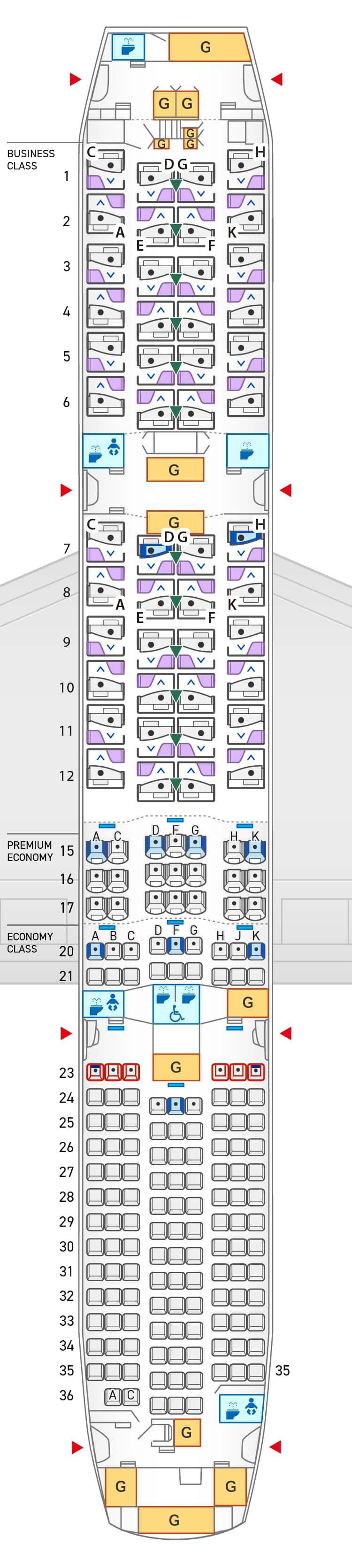
TellowKrinkle@treehouse.systems@whitequark No, but they do make planes with different percentages of business class seats
Here's two different 787-9s from ANA, one with 206 total seats and the other with 246:
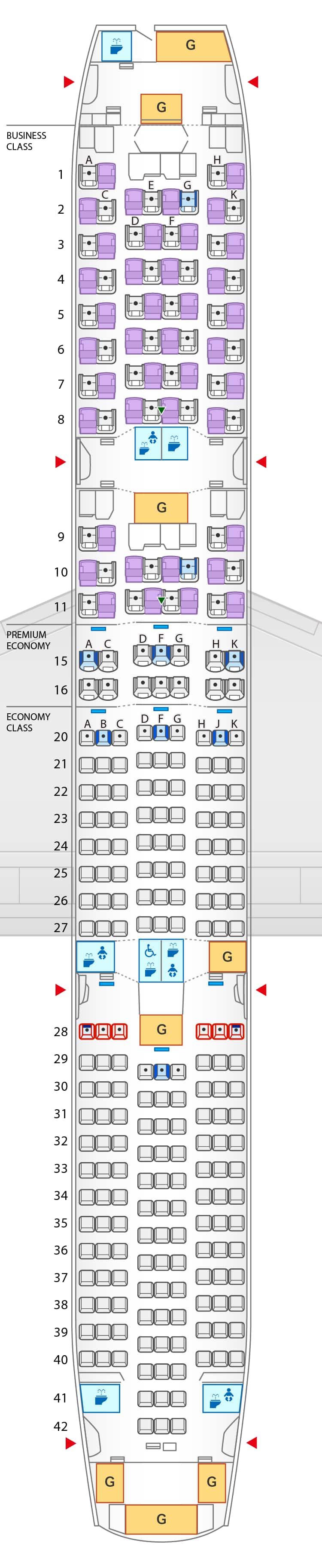 0
0
0
0
0
0

David Chisnall (*Now with 50% more sarcasm!*)
david_chisnall@infosec.exchange@whitequark It’s not just the weight of you.
The passenger weight doesn’t add a huge amount to the total energy cost of a plane. A 737 weighs around 30,000 kg. A full load of passengers and luggage adds about 1/3 more on top of that. That’s the dry weight, fuel also adds more.
At least 3/4 of the total energy is independent of the number of passengers. If you pack people in more densely, the per-passenger emissions are lower.
Normally these calculations take into account the ratio of space occupied by a business-class and economy-class passenger. If you could replace a first-class seat with three economy-class seats, with a small increase in weight (the per-passenger weight of the larger seats is also higher), then it’s fair to estimate the first-class passenger’s share of the emissions at around three times the economy-class passenger’s in the same plane.
Oh, and this doesn’t make much difference because not many people take advantage of it, but the luggage allowance in business class is much higher. BA economy is one 23 kg bag, business is two 32 Kg bags.
Airlines publish these numbers for their seat configurations and there are also some averages that various organisations have calculated.
(I previously asked this question at a sustainability talk)
0
2
0
David Chisnall (*Now with 50% more sarcasm!*)
david_chisnall@infosec.exchangeAirlines do fairly routinely rebalance the mix between classes. Extreme examples have economy (packed like sardines), premium economy (same seat but with enough space between them that they can actually fit a human), business (seat that turns into a bed and has a bit of privacy), and first (anything from business plus a couple of inches more legroom to something that looks almost like a private cabin) and adjust the mix based on demand.
When I had to fly to Seattle regularly, there was one airline (Norwegian?) that didn’t have first or business class. They were cheaper because they got a lot more people in the plane than anyone else (where BA fitted 12 people, they fitted over 30 in the seat-layout diagrams for the same model).
0
2
0

yopp
alex@yopp.me@whitequark @ktims I think luggage allowance included in fare, which is usually higher for business/first class, also plays a role here
0
2
0
half/byte
halfbyte@ruby.social@whitequark Ah, btw, while searching for the article for @janl, I found another interesting tidbit: Airlines seem to actually use real estate /o\ to assign their CO2 emissions (for compensation on tickets, I guess) and there's even an IATA recommended practice for it. (IATA RP1726)
(I did not try to find or read that, though)
Interesting.
1
0
0